
 Hotel Business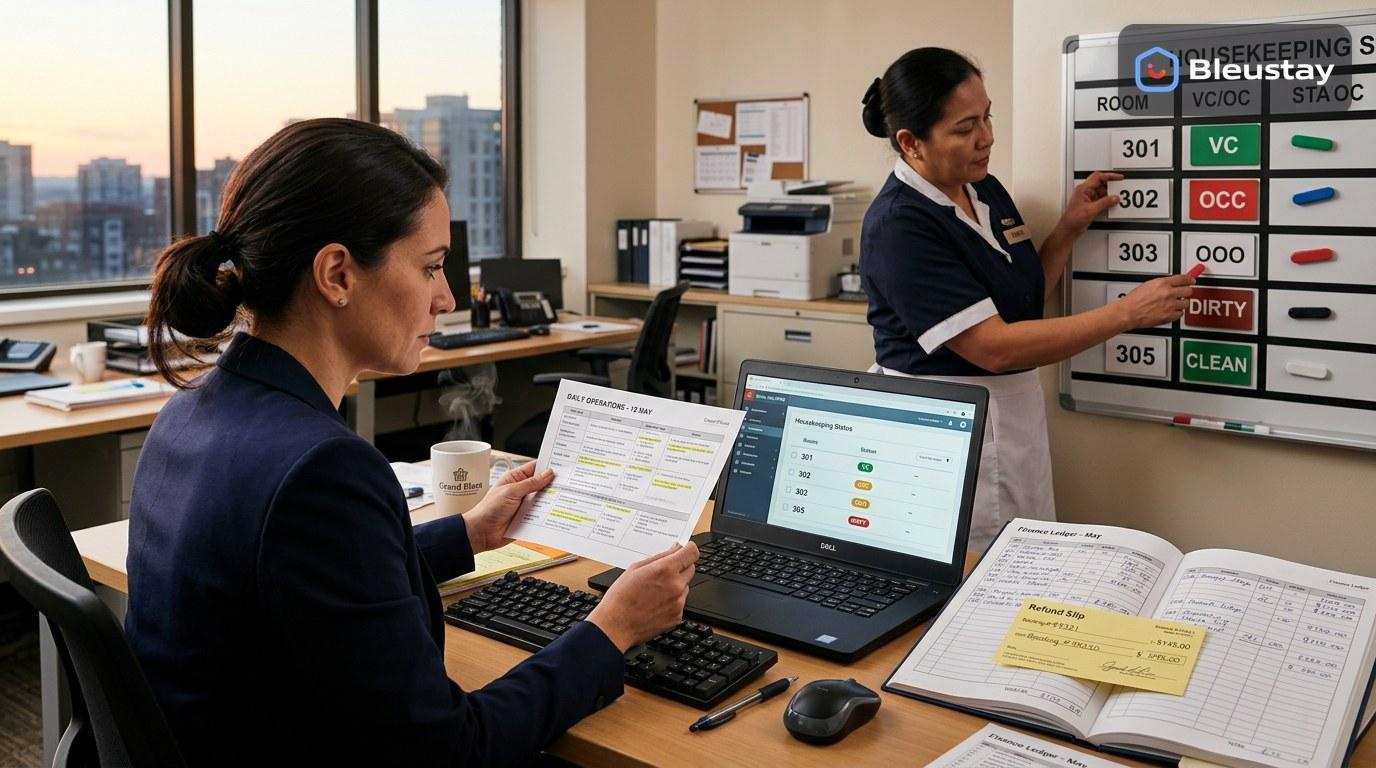
A hotel management software implementation succeeds when the hotel maps its workflows, cleans its data, trains staff by role, and tests room, billing, and housekeeping processes before go-live. For Indonesian hotels, operational readiness matters more than feature count, especially during peak periods in Bali and Jakarta.
Bleustay is a hotel PMS built to manage front desk, housekeeping, reservations, and billing workflows.
The checklist that prevents rollout chaos
Why cloud PMS shortens implementation time
Most software rollout problems in hotels are not caused by the system itself. They usually come from weak process mapping, unclear responsibilities, and messy data before launch. If front desk, housekeeping, reservations, and billing are not documented first, teams end up adapting the software on the fly, which creates service gaps.
For Indonesian hotels, that risk becomes more visible during high-occupancy periods in Bali and Jakarta. A room status mismatch or delayed billing correction can quickly affect guest experience and staff workload. That is why operational readiness should come before feature comparison.
A practical implementation checklist starts with workflow mapping. Identify who updates room status, who approves room assignment changes, how refunds are recorded, and how reservations move from booking to arrival. Bleustay supports this kind of alignment through housekeeping status updates, drag-and-drop room assignment at the front desk, and refund tracking for financial accuracy.
Next, clean the data. Old guest profiles, duplicate bookings, and inconsistent room records slow down go-live and create confusion for staff. Then set role-based permissions so each team sees only what it needs. This reduces mistakes and makes onboarding easier.
Cloud-based hotel systems also help independent hotels move faster. They reduce upfront infrastructure costs and make updates easier to manage, which shortens implementation time compared with traditional on-premise setups. But cloud alone is not enough. The real difference comes from disciplined preparation.
The hotels that get value faster are the ones that treat implementation as an operations project, not just an IT project. Train staff by role, test live scenarios before launch, and review financial reporting early so billing and reconciliation do not break after go-live. That is how hotels move from software installation to actual operational control.
Key facts
- Software rollout problems in hotels are usually caused by weak process mapping, not the software itself. (web findings, 2026)
- Bleustay supports housekeeping status updates, front desk room assignment, and refund tracking during rollout. (kb findings, 2026)
- Cloud-based hotel systems reduce upfront infrastructure costs and shorten implementation time for independent hotels. (web findings, 2026)
- Operational readiness matters more than feature count in hotel software rollouts, especially during peak periods in Bali and Jakarta. (combined insights, 2026)
Frequently asked questions
What should a hotel implementation checklist include?
It should include workflow mapping, data cleanup, role-based permissions, staff training, and pre-go-live testing for front desk, housekeeping, reservations, and billing.
Why do hotel software rollouts fail?
They usually fail because the hotel has not documented its processes clearly. The software is often fine, but the team is forced to improvise around broken workflows.
How does a cloud PMS help implementation?
A cloud PMS reduces upfront infrastructure costs and is easier to update, which helps independent hotels implement faster and with less technical overhead.
What should be tested before go-live?
Test room assignment, housekeeping status updates, reservation flow, refunds, and billing reconciliation so the hotel can catch operational gaps before guests feel them.
How does Bleustay support rollout readiness?
Bleustay helps hotels align front desk room assignment, housekeeping status updates, and refund tracking, which supports smoother adoption during implementation.
How should hotels prepare staff for new software?
Train staff by role, not all at once. Front desk, housekeeping, and finance teams each need different workflows and permissions before launch.