
 F&B
F&B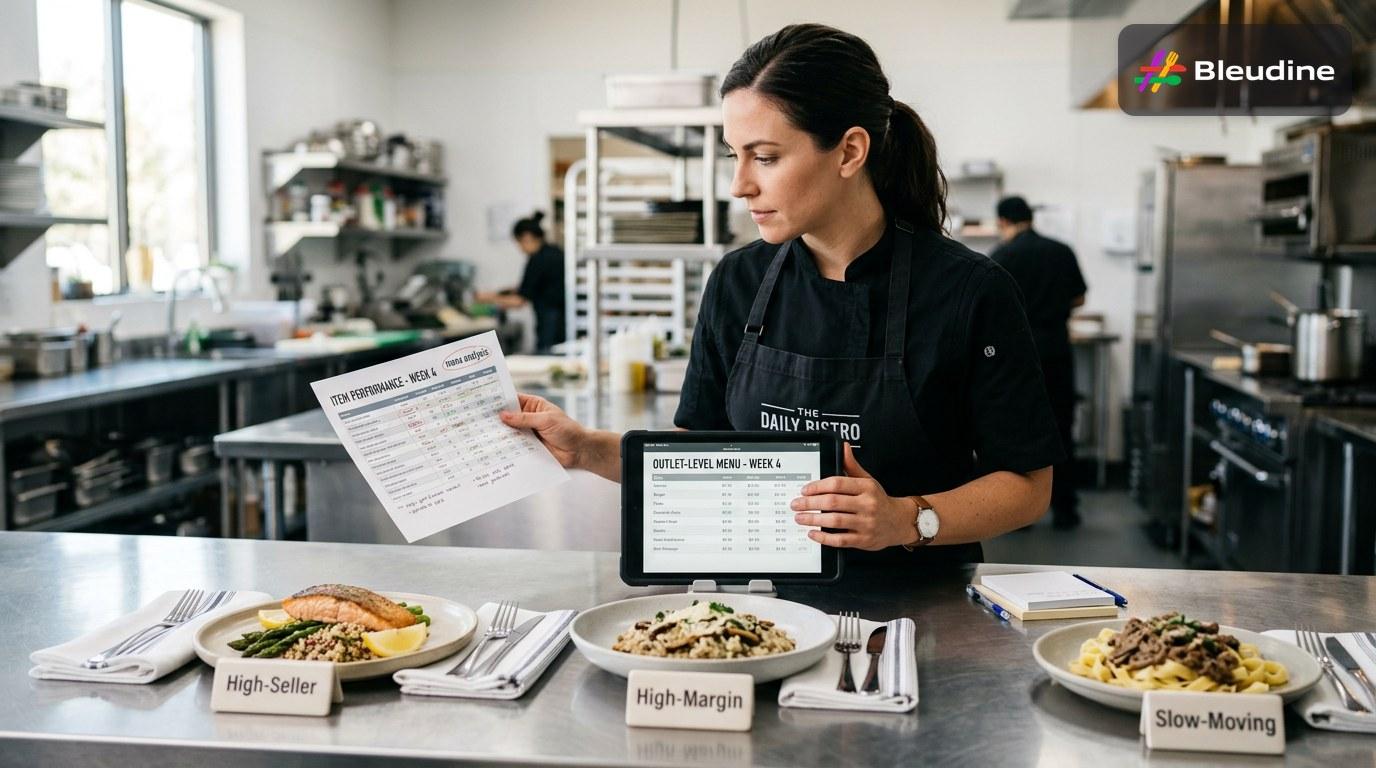
Menu engineering is the practice of ranking menu items by popularity and profit so restaurants know what to promote, reprice, reposition, or remove. For operators in Indonesia, it works best when item decisions are tied to outlet-level execution, especially across dine-in, GoFood, and GrabFood channels.
Bleudine is an F&B POS and management system for restaurants.
A practical checklist for restaurant teams
Start with item-level data, not opinions
Menu engineering only works when the menu is treated like an operating system, not a design file. The first step is to review each item by two axes: popularity and contribution margin. That gives you the four classic groups operators use to make decisions: winners, plowhorses, puzzles, and dogs.
For Indonesian restaurants, the checklist should be built around outlet reality. A dish that sells well in Jakarta may underperform in Bali because of different dayparts, delivery behavior, or promo sensitivity. That is why Bleudine’s outlet-level menu setup matters: it lets teams manage inventory, orders, and menu items by location instead of forcing one rigid menu across every store.
Use this practical sequence. First, pull sales by item for the last 30 to 90 days. Second, calculate contribution margin after direct food cost and packaging. Third, place each item into a performance bucket. Fourth, decide the action: promote, reprice, reposition, or remove. Fifth, update the menu in the POS and on delivery channels so the change is visible everywhere customers order.
The execution step is where many restaurants lose margin. A strong menu still fails if the outlet team cannot keep item names, pricing, and availability aligned across in-store service and delivery platforms. Bleudine supports structured menu setup after outlet activation, which helps restaurants keep that operational consistency without rebuilding the menu from scratch each time.
For operators facing QRIS-driven, digital-first purchasing habits, the menu also has to guide choice fast. That means putting profitable items in the best visual positions, reducing clutter, and giving attention to high-margin add-ons that can raise average order value. In practice, menu engineering is less about making the menu prettier and more about making each item work harder for the outlet.
The result is a tighter menu mix, better staff execution, and clearer profit signals across locations. For restaurants in Indonesia, that is usually the difference between a menu that looks busy and a menu that actually performs.
Key facts
- Menu engineering classifies items by popularity and contribution margin so operators can decide what to promote, reprice, reposition, or remove. (Provided opportunity object, 2026)
- Bleudine lets merchants manage inventory, orders, and menu items specific to each outlet. (Provided knowledge base input, 2026)
- Bleudine supports menu setup readiness after outlet activation. (Provided knowledge base input, 2026)
- Indonesia menu decisions should account for GoFood, GrabFood, and QRIS-driven ordering habits. (Provided opportunity object, 2026)
Frequently asked questions
What is menu engineering for restaurants?
It is the process of analyzing menu items by popularity and profitability so you can make better pricing, placement, and promotion decisions. The goal is to increase contribution margin without hurting guest experience.
How do I start menu engineering in one outlet?
Begin with 30 to 90 days of item sales, calculate contribution margin for each dish, and group items into winners, plowhorses, puzzles, and dogs. Then decide which items to promote, reprice, reposition, or remove.
Why does outlet-level menu management matter?
Different locations often have different demand patterns, food costs, and delivery performance. Outlet-level control lets you adjust items and availability based on how each store actually sells.
Should delivery menus and dine-in menus be the same?
Not always. Delivery menus often need a tighter item mix, better packaging logic, and pricing that reflects platform costs. The best operators optimize for each channel instead of copying one menu everywhere.
How often should restaurants review menu performance?
A monthly review is a good starting point for most operators, with faster checks during promotions or seasonal spikes. High-volume restaurants may need weekly monitoring for key items.
What should I do with low-selling items that still matter to the brand?
If an item has a strategic role, reposition it rather than remove it immediately. You can improve its placement, rename it, or pair it with a higher-margin add-on.
Can Bleudine help with menu setup by outlet?
Yes. Bleudine supports outlet-level menu item management and structured setup after outlet activation, which helps restaurants keep menus organized across locations.