
 Guide
Guide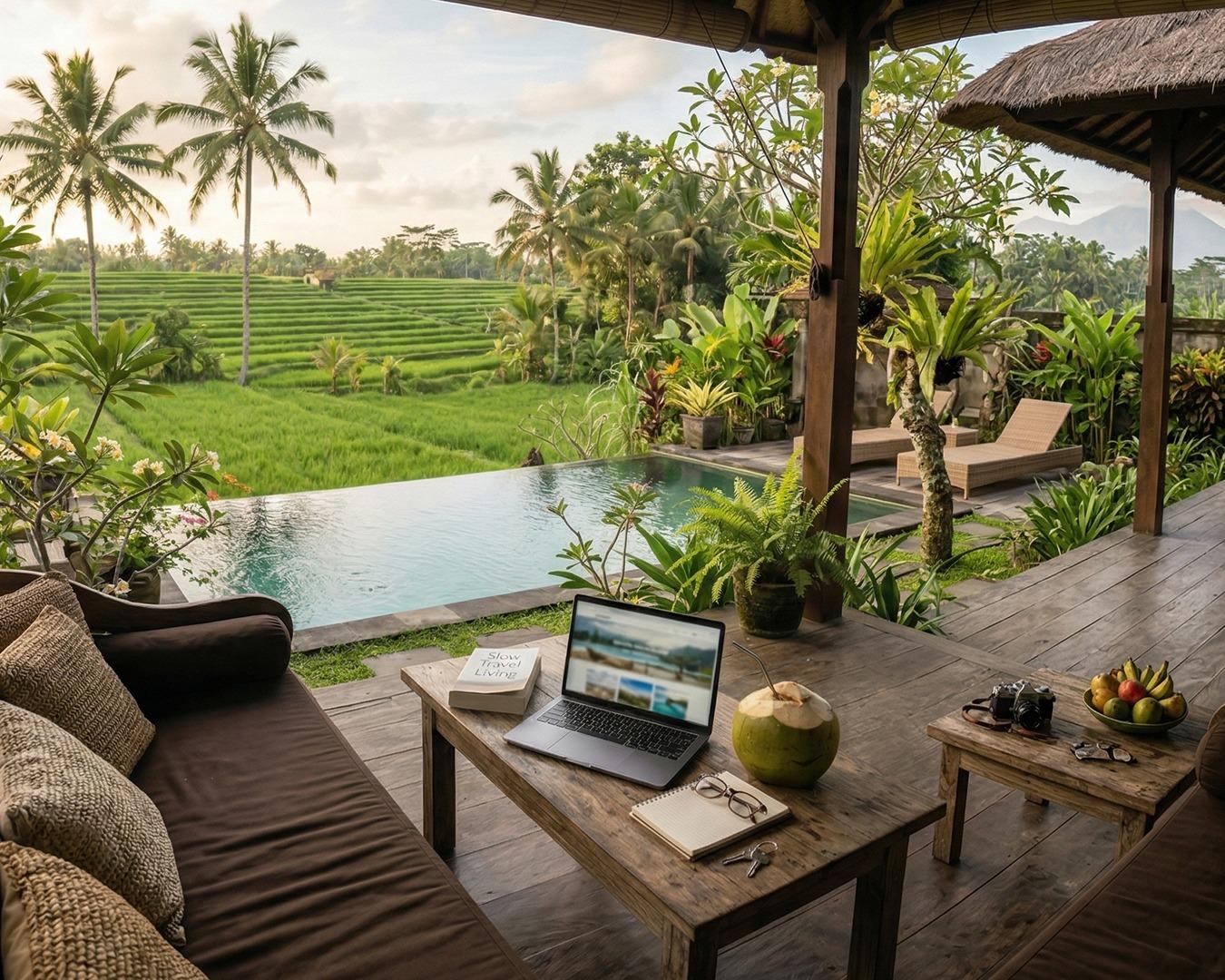
The travel landscape has undergone a seismic shift. The frantic “bucket-list” tourism of the early 2020s has been replaced by a more intentional, paced approach: Slow Travel. In 2026, the success of a rental property is no longer measured just by its location, but by its ability to function as a fully operational home.
For property managers, this shift represents a golden opportunity to stabilize income—if they are ready to evolve.
What is Driving the Slow Travel Boom in 2026?
This isn’t just a passing fad; it is a structural change in human behavior. Three core factors are at play:
- Work-from-Anywhere Maturity: Global corporations have standardized remote work, allowing employees to move their “office” to a villa in Bali or a cabin in the Alps for weeks at a time.
- Environmental Consciousness: Travelers are increasingly aware of their carbon footprint. Staying in one place longer reduces transport emissions and supports local, circular economies.
- The Wellness Economy: People are traveling to escape burnout. They want to cook their own meals, join local gyms, and establish a routine that mirrors a healthy lifestyle.
Why is Traditional Property Management Falling Short?
The old “hotel-style” management model—frequent check-ins, daily housekeeping, and high marketing spend per guest—is becoming inefficient. High turnover leads to increased wear and tear and higher operational costs.
Slow travelers aren’t looking for a “room”; they are looking for an ecosystem. This is why platforms like Rideum’s Property Management Solutions are essential. They bridge the gap between physical space and the digital-first expectations of the modern traveler.
Which Amenities are Non-Negotiable for 2026 Travelers?
To capture the 2026 market, your property must facilitate living, not just staying. Key requirements include:
- Business-Grade Connectivity: Sub-10ms latency and 100+ Mbps speeds are now as basic as running water.
- Ergonomic Workspaces: A kitchen table isn’t enough. Dedicated desks and comfortable chairs are top-tier filters for long-stay guests.
- Full Domestic Utility: High-end kitchens, in-unit laundry, and ample storage for personal belongings.
- Hyper-Local Integration: Digital guidebooks curated by Rideum that connect guests with local artisans, hidden markets, and community events.
How Does Technology Simplify Long-Stay Management?
Managing a guest for 30 days is fundamentally different from managing a guest for 48 hours. Communication becomes more personal, and maintenance needs become more predictable yet critical.
Rideum acts as your digital backbone in this transition. Our smart management systems automate:
- Automated Billing: Managing split payments or utility surcharges for longer stays.
- Preventative Maintenance: Scheduling deep cleans and appliance checks during guest stays without being intrusive.
- Dynamic Pricing: Automatically adjusting rates to favor longer durations, ensuring your calendar remains full during shoulder seasons.
By leveraging Rideum, property owners can maximize their passive income while the software handles the heavy lifting of guest relations and logistics.
Is Your Pricing Strategy Ready for the Slow Travel Era?
Fixed nightly rates are a relic of the past. To win in 2026, you need a Yield Management strategy that rewards loyalty:
- Tiered Discounting: Offer significant price breaks at the 7, 14, and 28-day marks.
- Value-Add Bundling: Include perks like a weekly organic grocery delivery or a local co-working space pass.
- Stability over Volatility: One 30-day booking is often more profitable than ten 2-day bookings when you factor in cleaning costs and platform fees.
For a deeper dive into maximizing your margins, check out our guide on Advanced Revenue Management for Modern Rentals.
What are the Biggest Challenges for Managers Today?
Transitioning to a Slow Travel model isn’t without its hurdles:
- Asset Maintenance: Longer stays mean more “lived-in” wear. You need a robust system to track the condition of your property.
- Regulatory Compliance: Some regions have different legal requirements for stays exceeding 28 days.
- Personalization at Scale: Slow travelers expect a higher level of hospitality. They want to feel like a “local,” not a tourist.
Why Partner with Rideum Today?
The window to position your property as a premier Slow Travel destination is closing as more investors enter the space. Rideum provides the expertise and the technological suite to transform a standard villa or apartment into a high-performance asset. We don’t just manage properties; we curate experiences that keep guests coming back year after year.
Conclusion
Slow Travel in 2026 is about the “Power of Place.” Travelers want to belong, and property managers have the opportunity to provide that sense of home. By focusing on quality, sustainability, and the seamless integration of technology through Rideum, you can future-proof your business against the volatility of traditional tourism.