
 F&B
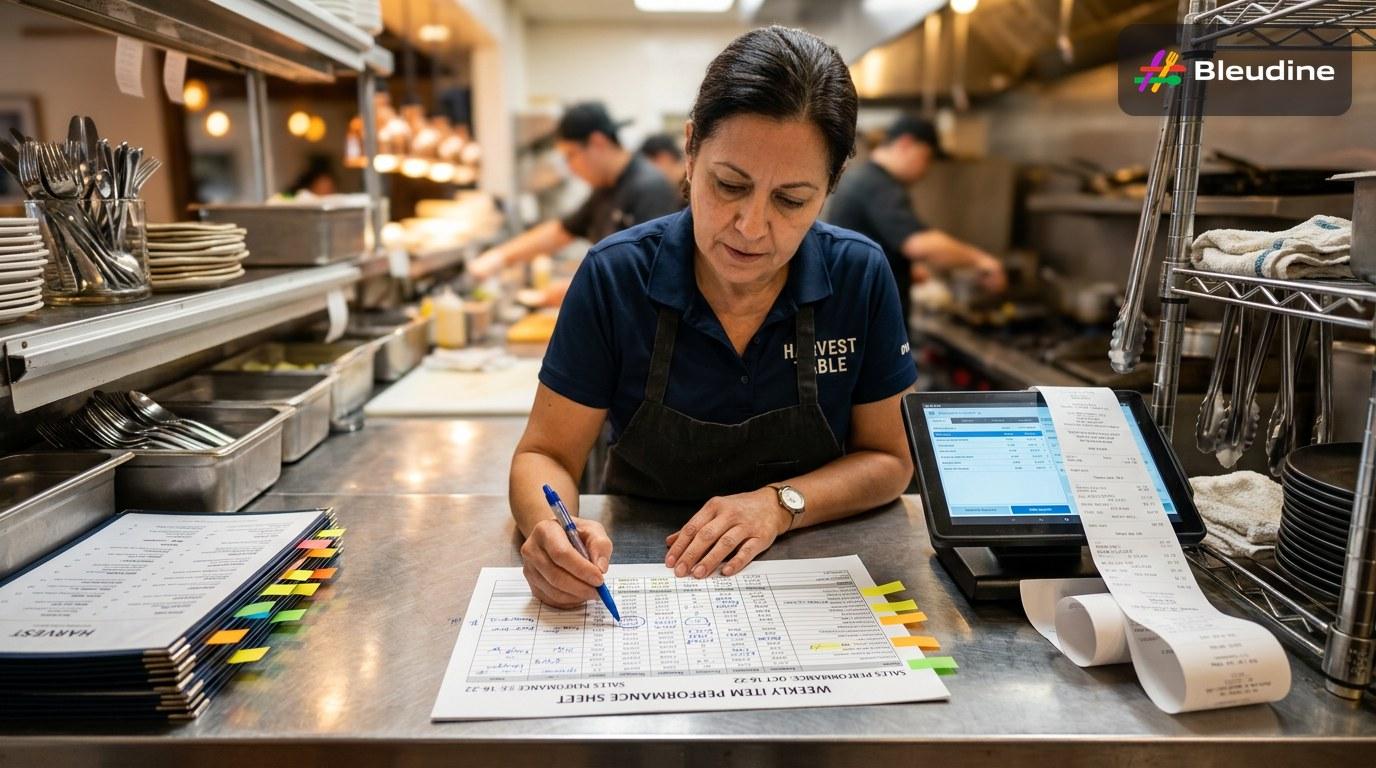
Menu engineering works best when restaurants turn it into a weekly operating routine, not a one-time redesign. Start with two inputs: contribution margin and sales popularity. Then review items by daypart and channel, classify them into stars, plowhorses, puzzles, and dogs, and set clear rules for pricing, bundling, and staff upselling.
Bleudine is an F&B POS and management system for restaurants in Indonesia.
The checklist most restaurants skip
Why data review must lead every menu change
Menu engineering is not just a spreadsheet exercise. It is an operating process that starts with item-level sales data and ends with specific decisions on pricing, placement, bundling, and staff behavior.
The two core inputs are simple: contribution margin and sales popularity. Those inputs let operators classify each item into four groups: stars, plowhorses, puzzles, and dogs. The point is not to label items for the sake of it, but to decide what to promote, what to protect, what to fix, and what to remove.
In practice, the best restaurants review performance by daypart and channel. A dish that performs well during dinner dine-in may underperform on delivery. Another item may sell heavily at lunch but carry a weak margin. POS data makes those patterns visible, which is why menu decisions should be based on real transaction records rather than intuition alone.
A strong implementation checklist should include five steps: export item-level sales data, calculate contribution margin, group items by daypart and channel, assign each item to a menu-engineering category, and set a review cadence. Weekly or monthly review works better than ad hoc changes because teams need time to test pricing, packaging, and upsell scripts.
Staff training matters just as much as analysis. If a restaurant changes the menu but does not train servers to recommend high-margin items, the operational impact stays small. That is where outlet-level discipline helps. Bleudine supports daily restaurant operations such as order handling, table management, and transaction oversight, while staff binding helps ensure receipts print to the right printer for the right staff member. Those controls reduce friction when menu changes affect service flow.
Bleudine invoice management also supports reconciliation by tracking bill amount, invoiced amount, paid amount, and remaining balances. For operators running tighter menu tests, that level of clarity helps maintain control while the team adjusts pricing and promotion strategies.
The best menu engineering implementation is simple: collect clean data, make one decision rule for each item category, train the team, and review results on a fixed schedule. Without that discipline, menu engineering becomes a report. With it, it becomes a profit system.
Key facts
- Menu engineering uses two core inputs: contribution margin and sales popularity. (Web findings, 2026)
- Items are typically classified into four groups: stars, plowhorses, puzzles, and dogs. (Web findings, 2026)
- Restaurants should review item performance by daypart and channel, including dine-in and delivery. (Web findings, 2026)
- Bleudine supports daily outlet operations such as order handling, table management, and transaction oversight. (KB findings, 2026)
- Bleudine invoice management tracks bill amount, invoiced amount, paid amount, and remaining balances for reconciliation. (KB findings, 2026)
Frequently asked questions
What is the first step in menu engineering implementation?
Start by collecting item-level sales data and contribution margin. Without those two inputs, you cannot classify menu items accurately or make profitable pricing decisions.
How often should restaurants review menu engineering results?
A weekly or monthly cadence works best. The important part is consistency, so the team can test changes and compare results over time.
What data do restaurants need for menu engineering?
At minimum, restaurants need sales volume, contribution margin, and performance by daypart and channel. That lets operators see whether an item works better for dine-in, delivery, lunch, or dinner.
What do stars, plowhorses, puzzles, and dogs mean?
Stars are high-margin, high-popularity items. Plowhorses sell well but may have weaker margins, puzzles have good margins but low sales, and dogs perform poorly on both measures.
How can staff help menu engineering work better?
Staff should be trained to recommend high-margin items, explain menu changes clearly, and support new pricing or bundling rules. Without training, the data will not translate into better sales.
Can POS data support menu engineering?
Yes. POS data helps track item performance across channels and dayparts, which is essential for deciding whether to reprice, bundle, promote, or remove an item.
How does Bleudine help restaurant operations during menu changes?
Bleudine helps manage orders, tables, and transactions at the outlet level. Its staff binding and invoice management features also support smoother execution and reconciliation during menu updates.