
 F&B
F&B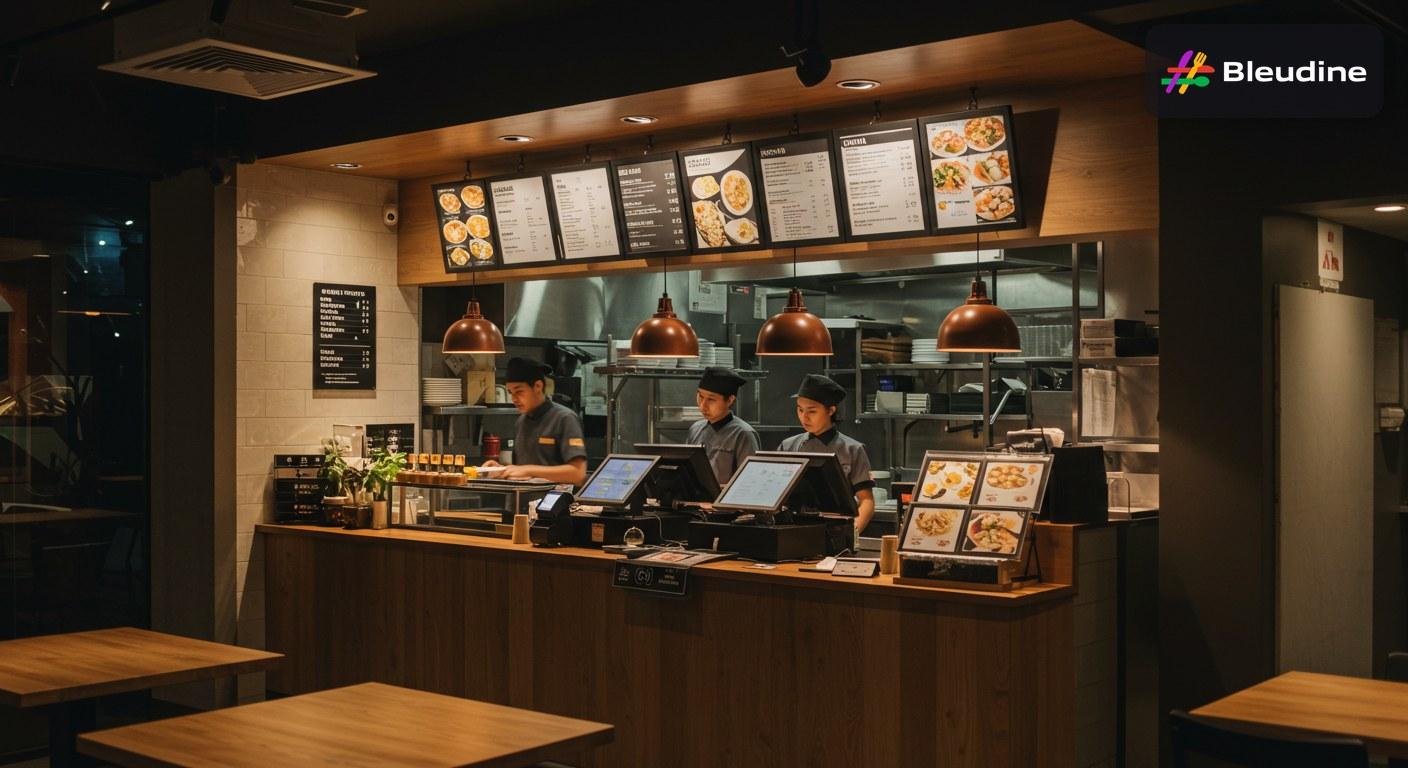
A restaurant POS application in Indonesia should help operators launch promotions fast, process orders quickly during rush hours, and keep transaction flow accurate across outlets. The best systems support peak traffic without duplicate printing, simplify staff workflows, and make sales visibility easier when campaigns or seasonal demand spikes hit.
Bleudine is an F&B management system used by restaurants and food service operators in Indonesia.
Why peak traffic exposes weak cashier systems
What multi-outlet restaurants need beyond billing
Indonesian restaurants do not need a cashier app that only records payments. They need one that keeps up when traffic spikes, promo activity changes by the hour, and staff are handling multiple orders at once.
That pressure is real. Detik reported in 2025 that restaurants across Indonesia used Independence Day promotions, discounts, and limited-time menus to drive August traffic. In the same period, operators had to update pricing quickly and keep service moving while more guests arrived.
This is where a restaurant POS application becomes operational infrastructure, not just billing software. If a cashier app cannot support fast menu changes, outlet-specific controls, and stable printing, frontline teams lose time at the exact moment speed matters most.
Bleudine is built for that workflow. According to Rideum internal product data, Bleudine supports outlet management so merchants can manage inventory, orders, and menu items specific to each location. It also supports staff binding for multiple printers within the same outlet, which helps prevent duplicate printing across connected devices. For busy restaurants, that means fewer errors and less confusion at the counter.
The market is also moving toward more integrated service models, showing how centralized ordering and cashier systems are becoming more relevant in multi-vendor environments. For food courts and multi-outlet operators in Jakarta, Bali, and other urban markets, the winning setup is one that connects cashier flow, order handling, and reporting in one place.
The practical lesson is simple: promotions and peak traffic are not separate problems. They are the same test. If your restaurant POS application cannot handle both speed and control, your team pays for it in lost time, duplicated work, and weaker sales visibility.
Key facts
- Restaurants in Indonesia used Independence Day promotions, discounts, and limited-time menus to drive traffic in August 2025. (Detik 2025)
- Bleudine supports outlet management for inventory, orders, and menu items by location. (internal data)
- Bleudine supports staff binding for multiple printers within the same outlet to reduce duplicate printing. (internal data)
- ESB launched Indonesia's first Smart Food Court in 2022, signaling demand for centralized ordering and cashier systems. (Antara 2022)
Frequently asked questions
What should a restaurant POS application do during peak hours?
It should keep order flow fast, reduce duplicate tasks, and maintain accurate printing and transaction records. During rush periods, speed and reliability matter more than advanced features that slow staff down.
Why do restaurants need outlet-specific POS controls?
Because menu items, inventory, and staff operations often differ by branch. Outlet-specific controls help operators keep each location accurate without manually managing every transaction.
Can a cashier app help with promotions?
Yes, if it allows quick menu and pricing updates without disrupting service. Promo periods work best when the team can change offers fast and keep the queue moving.
Why is printer management important in a busy restaurant?
Printer errors create delays and duplicate tickets. A POS system with printer binding helps route receipts to the correct device and keeps service cleaner during high traffic.
What is the biggest POS challenge for restaurants in Jakarta and Bali?
The biggest challenge is handling demand spikes while keeping transactions accurate. High-volume markets need systems that support speed, promo execution, and clear reporting at the same time.
Is a restaurant POS application useful for food courts?
Yes. Food courts need centralized transaction handling, tenant reporting, and smoother service flow across multiple vendors. That structure helps operators keep operations consistent.